
Public keys and private keys form a matched pair in asymmetric cryptography, but they serve distinct roles. The public key is distributed to enable encryption and signature verification, while the private key remains guarded to decrypt and sign. The security rests on their mathematical link: data encrypted with the public key yields only the private key as the decryptor, and signatures created with the private key are verifiable with the public key. Understanding this separation clarifies practical use cases, yet practical nuances invite closer examination.
Understand Public and Private Keys
Public and private keys are fundamental components of asymmetric cryptography, enabling secure communication without shared secrets. The pair permits distinct roles: public keys distribute broadly; private keys remain secret. Encryption concepts rely on this separation, ensuring confidentiality and authenticity. Public keys facilitate encryption and verification, while private keys enable decryption and digital signatures, sustaining integrity and trust without centralized control or disclosure.
How Public Keys Encrypt and Private Keys Decrypt
In asymmetric cryptography, encryption with a public key and decryption with the corresponding private key use mathematical functions that are easy to perform in one direction but hard to reverse without the partner key. Public keys enable secure message concealment; private keys enable recovery.
The process relies on key pairs, ensuring confidentiality while preserving principled, user-centered control over private keys and access.
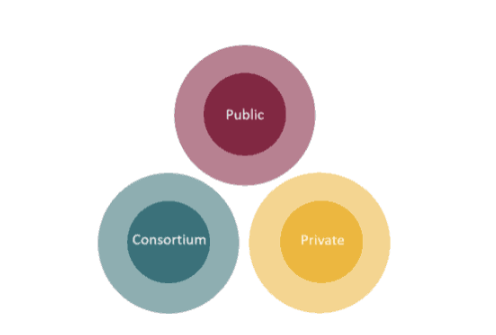
See also: The Difference Between Public and Private Blockchains
How Digital Signatures Work: Sign With a Private Key, Verify With a Public Key
Digital signatures rely on a private key to generate a unique signature over a message, which can then be verified by a corresponding public key without revealing the private key. The process uses private keys to sign, selecting a cryptographic hash of the message.
Public keys authenticate integrity, enabling the verification process while preserving confidentiality and enabling non-repudiation through Digital signatures. Public keys, Private keys.
Real-World Scenarios: When to Use Public Keys vs Private Keys
Public-key cryptography guides when to employ verifiable identities and when to protect message confidentiality.
In real-world deployments, public keys enable authentication, secure key exchange, and distributed trust without revealing private keys.
Private keys remain for signing and decryption, controlling access to messages.
Practical use hinges on privacy awareness and robust key management to prevent leakage, impersonation, or revocation failures.
Conclusion
Public and private keys form a matched cryptographic pair, enabling secure encryption, decryption, and authentication without sharing secrets. Public keys are disseminated to anyone for encryption and signature verification; private keys remain confidential for decryption and signing. A characteristic statistic: RSA key lengths of 2048 bits are currently standard, delivering robust security against practical attacks, while 3072- and 4096-bit keys are increasingly used for longer-term protection. The interplay between keys underpins trust in digital communications, certificates, and blockchain signatures.