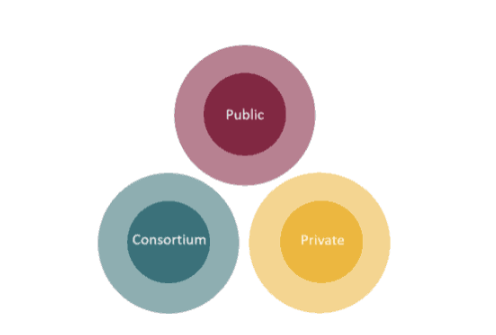

Public and private blockchains reflect distinct governance and trust assumptions. Public systems emphasize openness, censorship resistance, and broad participation, while private nets prioritize controlled access, centralized oversight, and predictable performance. The trade-offs touch on transparency, data sovereignty, and incentive structures, shaping resilience versus compliance. Analysts must weigh incentives, governance, and auditability against privacy and speed. The consequence is not obvious, and the tension invites closer examination of how each model handles interoperability and future risk.
Public Blockchains vs Private Blockchains: Definitions and Core Categories
Public blockchains and private blockchains represent two fundamental approaches to distributed ledger technology, distinguished by governance, access, and trust assumptions rather than by mere technical components. This distinction yields divergent privacy implications and governance models. Public forms emphasize openness and censorship resistance, while private variants prioritize controlled participation. Analysts remain skeptical about claimed neutrality, urging rigorous evaluation of institutional incentives and governance structures.
See also: How Artificial Intelligence Improves Manufacturing Quality Control
How Public Blockchains Work: Consensus, Transparency, and Security
In open, permissionless networks, consensus mechanisms coordinate participant actions, validate transactions, and enforce the ledger’s shared state without centralized authority.
These systems balance transparency with security, yet governance models shape incentives and resilience.
Token economics influence participation and stake, while openness invites scrutiny and risk.
Critics question scalability, centralization tendencies, and attack surfaces, urging rigorous governance and robust reliability assurances.
How Private Blockchains Work: Access Control, Governance, and Performance
Access to private blockchains is tightly constrained, with governance and performance driven by explicit permissions, centralized oversight, and specialized infrastructure. The model emphasizes restricted participation, auditability, and predictable throughput, yet raises questions about privacy models and external interoperability concerns.
Skeptics argue that such controls may erode autonomy while preserving efficiency, suggesting that protected ecosystems still face trade-offs between transparency and control.
Which Should You Use? A Practical Public-vs-Private Blockchain Decision Guide
Determining which blockchain architecture—public or private—is appropriate hinges on balancing openness, security, and governance with control, performance, and regulatory compliance.
A practical decision guide scrutinizes trade-offs without bias, highlighting data sovereignty concerns and interoperability challenges.
Readers seeking freedom should weigh transparency versus confidentiality, governance rigidity against adaptability, and cross-system compatibility against streamlined, domain-specific operation.
The result is a disciplined, evidence-based selection framework.
Conclusion
In evaluating public versus private blockchains, it is essential to weigh openness against control. Although public networks boast broad participation and verifiable consensus, their throughput and privacy guarantees often lag behind enterprise needs; private networks offer predictability and governance but at the cost of decentralization. A striking statistic: studies show that only a minority of organizations achieve both scale and robust privacy in public chains, suggesting hybrid or permissioned models frequently meet practical demands more effectively. Skepticism remains warranted about universal suitability.